EduVista Strategic Pivot
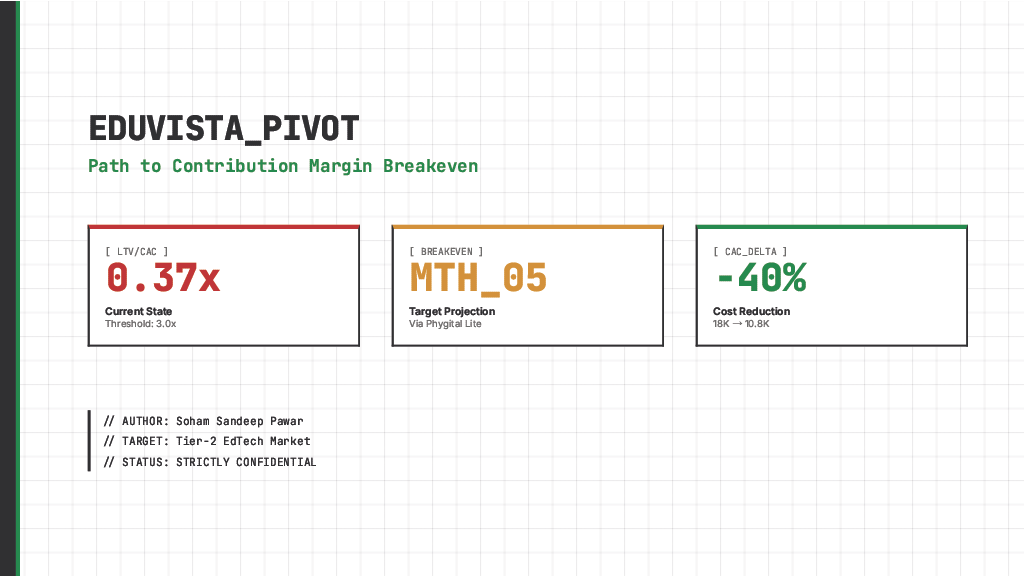
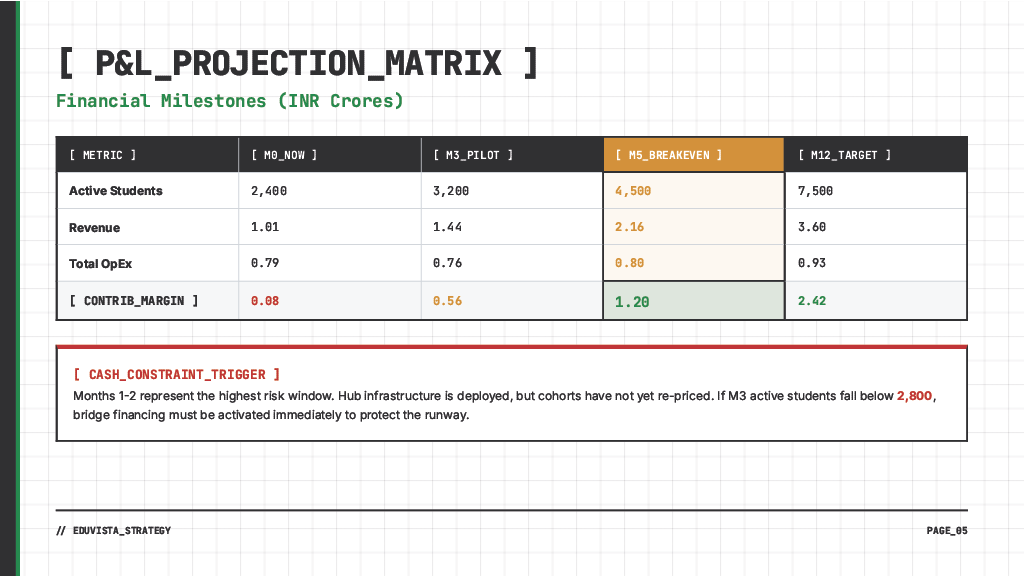
A MECE-driven turnaround strategy and bottom-up financial model for a Series B EdTech. Engineered a 'Phygital Lite' operational pivot that drops CAC by 40%, expands gross margin to 52%, and achieves contribution margin breakeven by Month 5 within the existing runway.
LTV/CAC
0.8x → 3.1x
CAC
₹18,000 → ₹10,800
Runway
6 → 18 months
01 // Executive Pitch Deck
02 // Dynamic Unit Economics Model
The Problem
Burning cash with no viable path to unit profitability
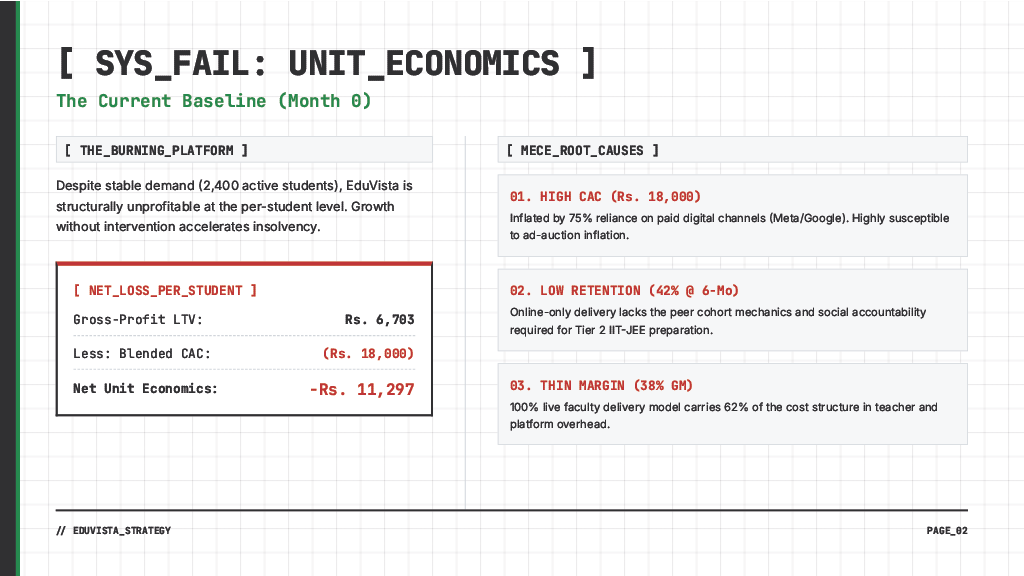
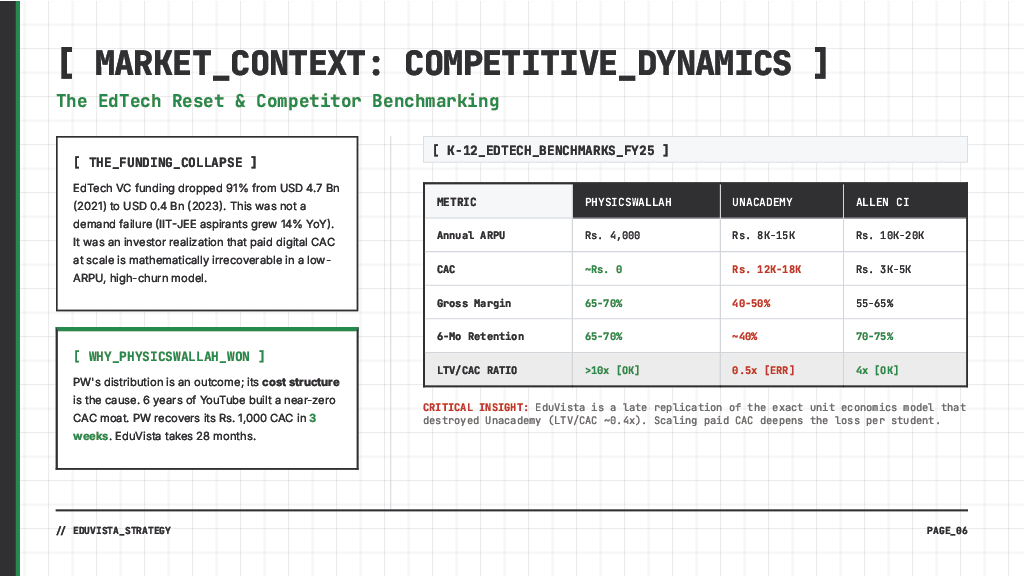
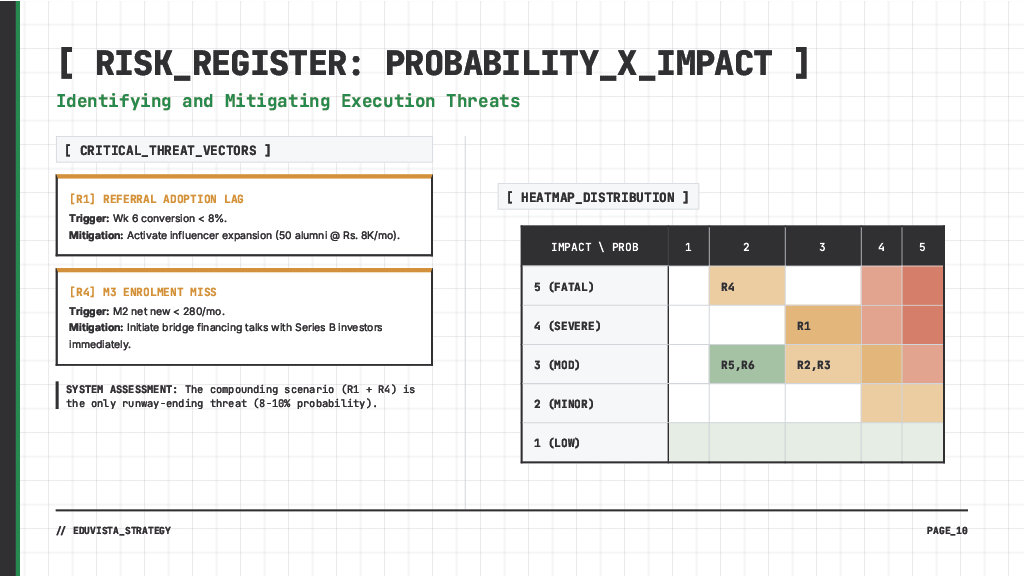
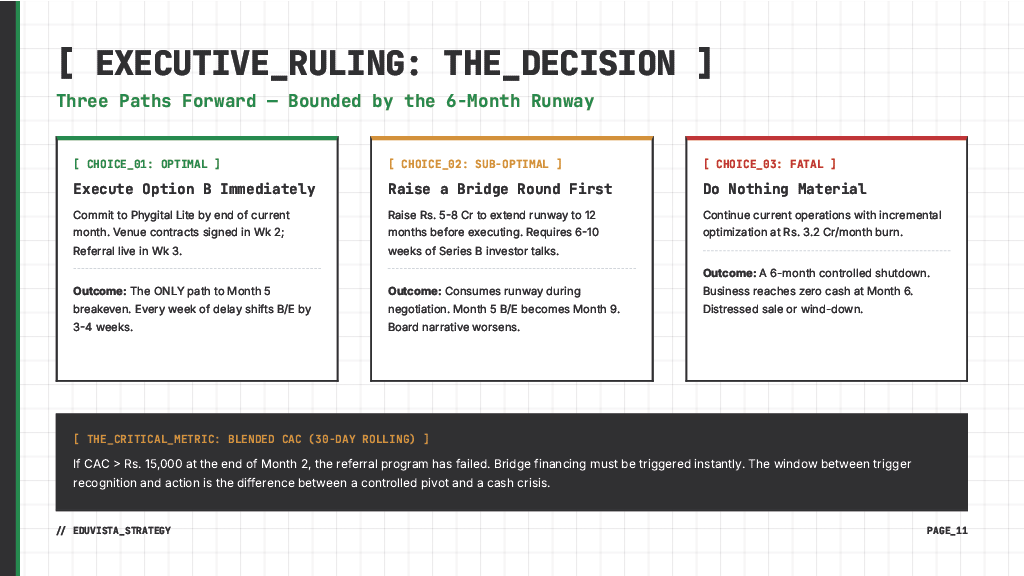
EduVista, a Series B IIT-JEE coaching startup, was burning ₹3.2 Cr/month with just 6 months of runway left. The core problem wasn't market demand — it was structurally broken unit economics at every level. CAC stood at ₹18,000, nearly 4.5× above the viable threshold for their price point. Student churn hit 58% by Month 6, destroying lifetime value before fixed costs could be recovered. Meanwhile, faculty scaling was purely linear: every new cohort required proportional instructor headcount, making the cost base rigid and non-scalable. The company's LTV/CAC ratio of 0.8x meant each new customer actively destroyed value rather than creating it.
Root Cause Breakdown
CAC 4.5× Threshold
Paid acquisition channels inflating cost per enrolled student to ₹18,000 against a sustainable ₹4,000 benchmark.
58% Churn by Month 6
Students dropping out before reaching the high-margin renewal cycle, collapsing LTV and making payback impossible.
Linear Faculty Scaling
Zero leverage in instructional delivery — every new cohort required proportional instructor addition, preventing margin expansion.
The Recommendation
Phygital Lite — a capital-efficient hybrid delivery model
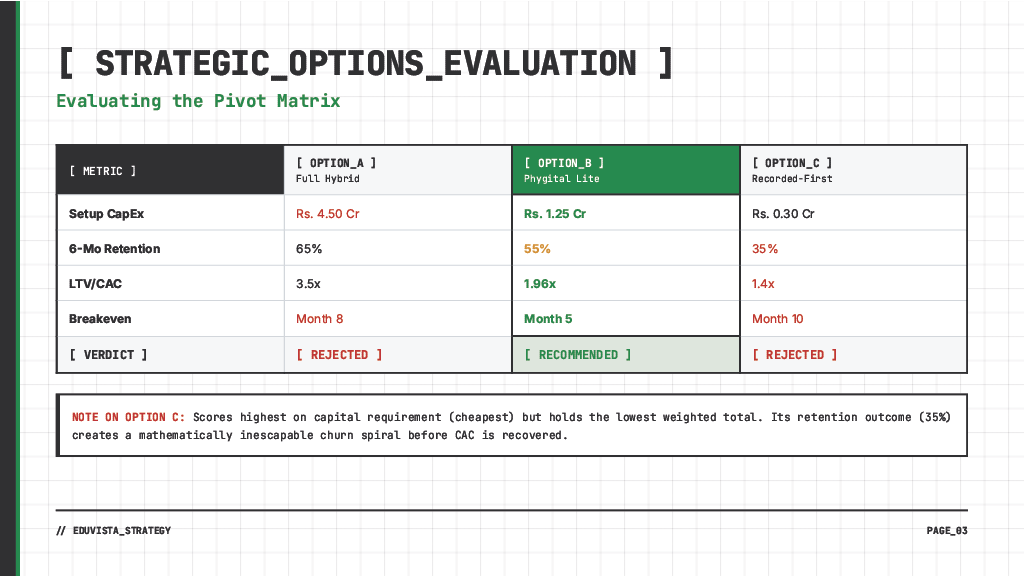
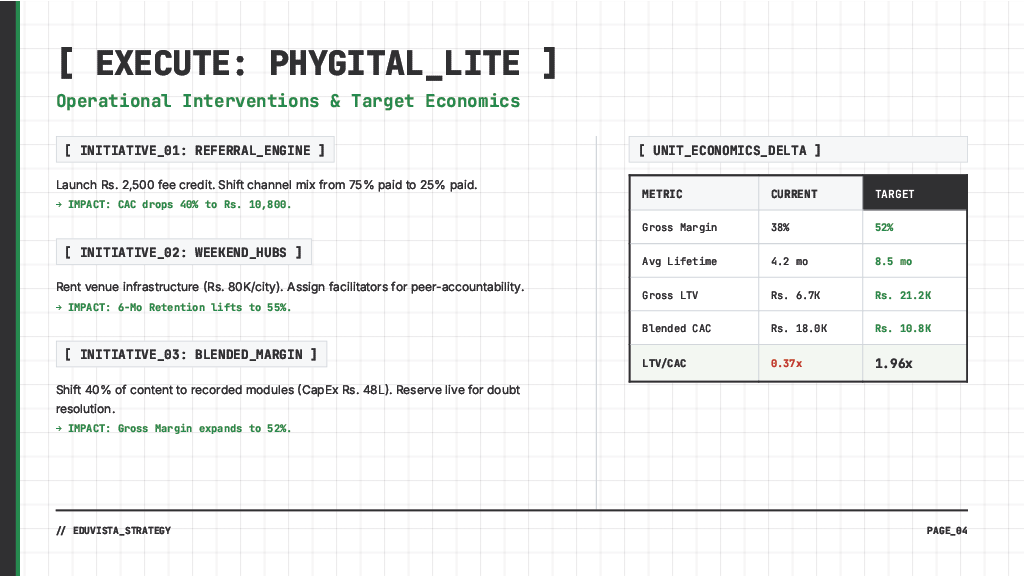
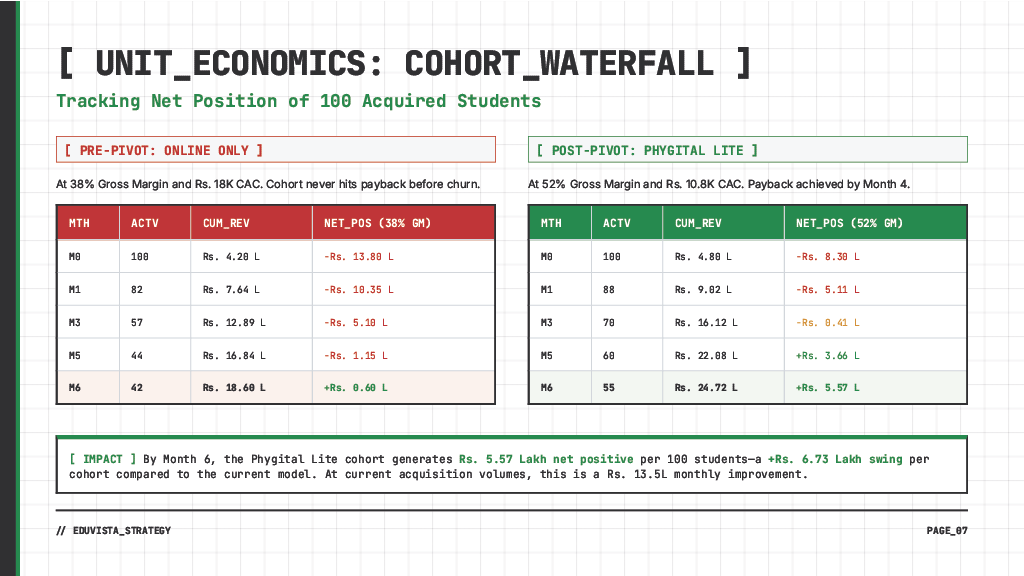
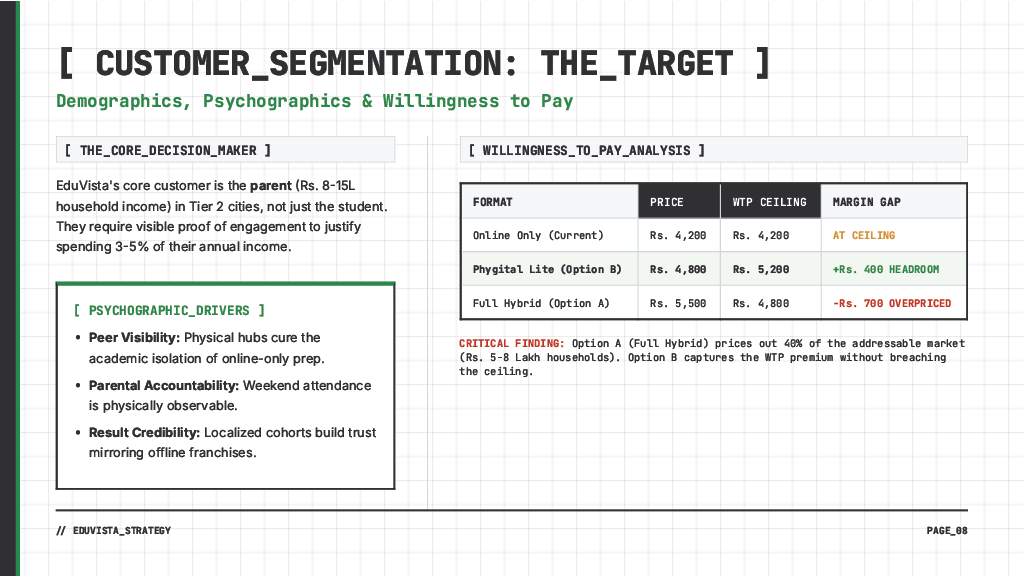
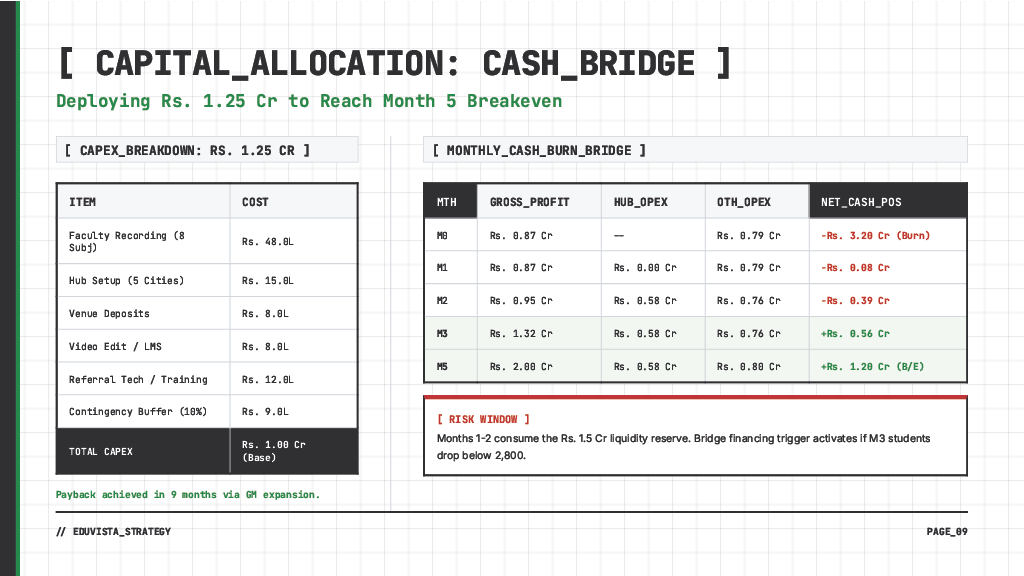
After ruling out full online (high churn, low trust in Tier 2) and full physical (linear cost, unscalable), I designed the “Phygital Lite” model: 5 Tier 2 weekend hubs anchored by recorded content from top faculty, supported by local facilitators paid on attendance-linked contracts. Students get the credibility of structured classroom touchpoints without EduVista bearing full staffing costs. Projected capex of ₹1.6 Cr achieves breakeven at Month 5, dropping CAC to ₹10,800 through hyper-local community referral channels instead of paid digital. Recorded content amortizes across cohorts — finally introducing non-linear scaling into the cost structure.
Tools & Frameworks Used
The Impact
Runway extended from 6 to 18 months
The Phygital Lite model projects a CAC reduction from ₹18,000 to ₹10,800 — a 40% drop driven by referral-led acquisition. LTV/CAC lifts from 0.8x to 3.1x as churn is structurally addressed through classroom accountability loops. Monthly burn reduces from ₹3.2 Cr to under ₹2.1 Cr, extending runway from 6 to 18 months and creating the breathing room needed to prove the model before the next raise. The full financial model, sensitivity tables, and cohort projections are available in the linked Excel workbook and published research.
“In EdTech, unit economics aren't a finance problem — they're a delivery model problem. Fix the model, and the numbers follow.”