The Transformative ROI of Generative AI in Content Creation: A Data-Driven Analysis
A comprehensive analysis of how generative AI is delivering measurable ROI in content creation across industries, with case studies and actionable insights.
The Transformative ROI of Generative AI in Content Creation
Introduction
In today's rapidly evolving digital landscape, generative AI has emerged as a game-changing technology for content creation across industries. What began as experimental adoption has now demonstrated measurable returns that are reshaping how organizations approach content development, marketing strategies, and customer engagement.
This comprehensive analysis examines the concrete ROI metrics of generative AI in content creation, backed by recent data, case studies, and industry insights to help you understand the tangible business value this technology delivers.
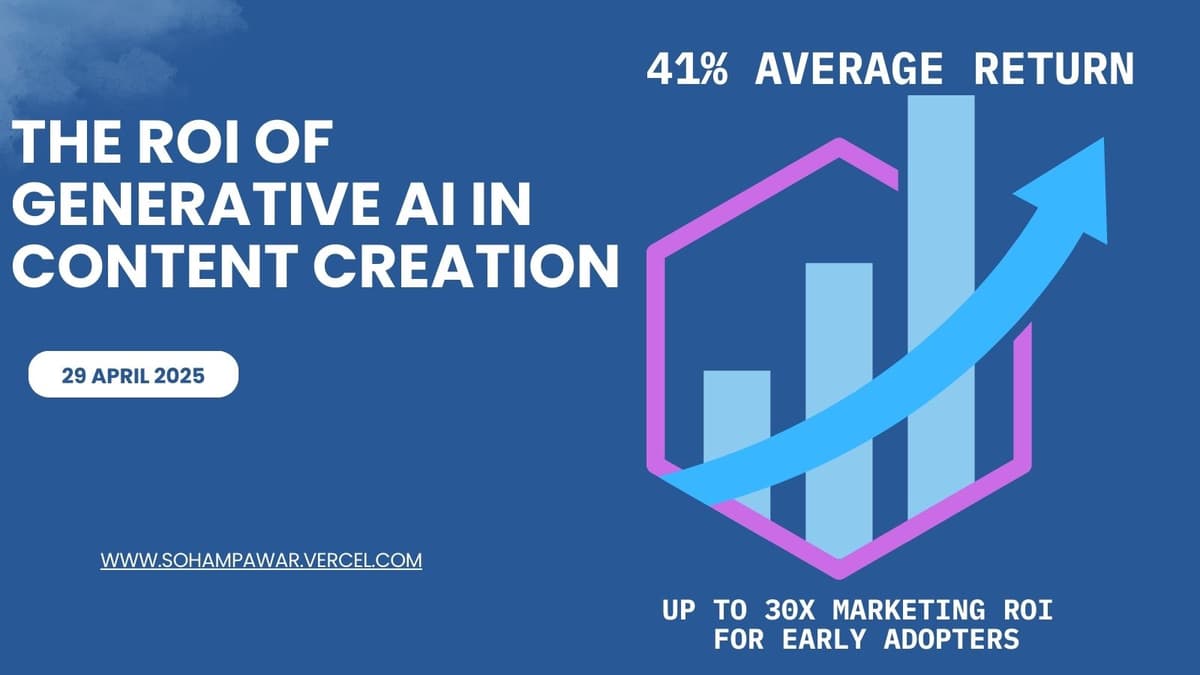
The Current State of Generative AI Adoption has moved beyond the experimental phase, with early adopters now reporting significant, measurable returns. According to recent research, 92% of early adopters report positive returns on their generative AI investments. The majority who have quantified their ROI see an average 41% return – a figure compelling enough to drive increased investment across data infrastructure, LLMs, supporting software, and talent.
This widespread positive experience explains why organizations are rapidly integrating generative AI into their content creation workflows, from marketing materials to customer communications.
Key ROI Metrics in Content Creation
Financial Returns
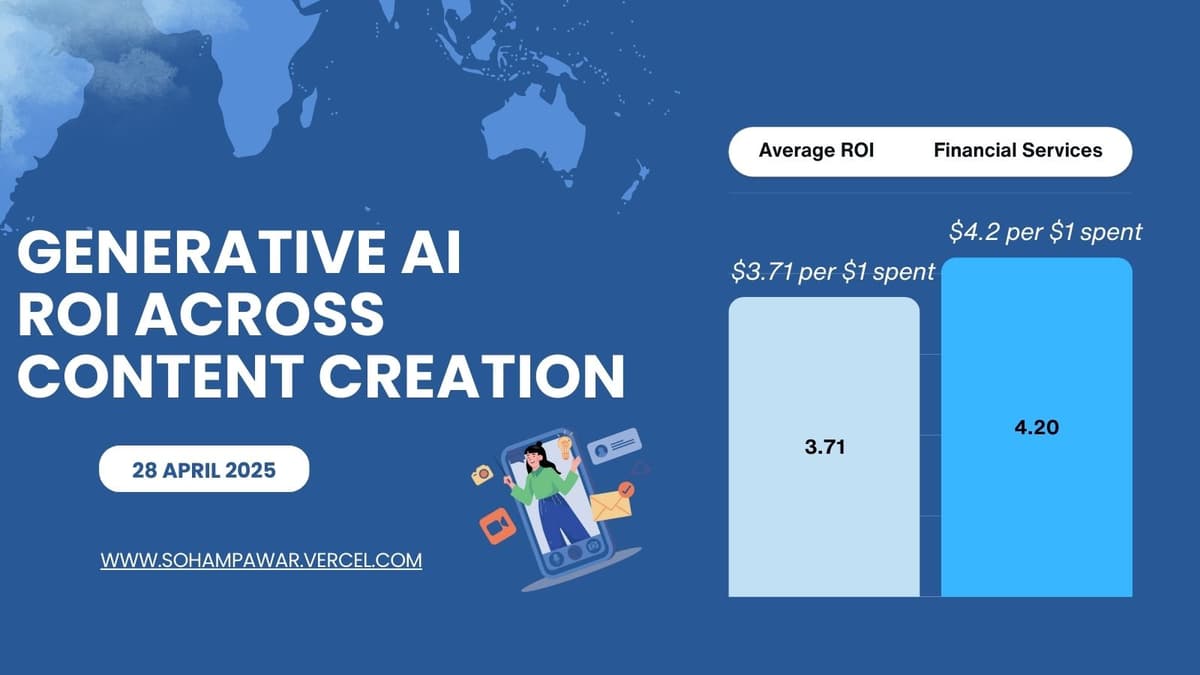
- Average Return: For every $1 spent on generative AI, adopters see an average return of $3.71
- Financial Services: Companies in this sector report even higher returns at 4.2x on their generative AI investments
- Marketing Teams: Many organizations using generative AI for marketing witness up to 3x returns
Efficiency Improvements
- Performance Boost: 58% of marketers cite improved performance as the most significant benefit
- Creative Diversity: 50% report increased creative variety in their content
- Faster Production: 47% experience faster creative cycles, dramatically reducing time-to-market
- Cost Efficiency: 50% note that cost efficiencies improved over time as teams optimized their implementations
📊 The efficiency gains compound over time, as teams develop better prompts and workflows that integrate generative AI into existing content operations.
Case Study: Iternal Technologies
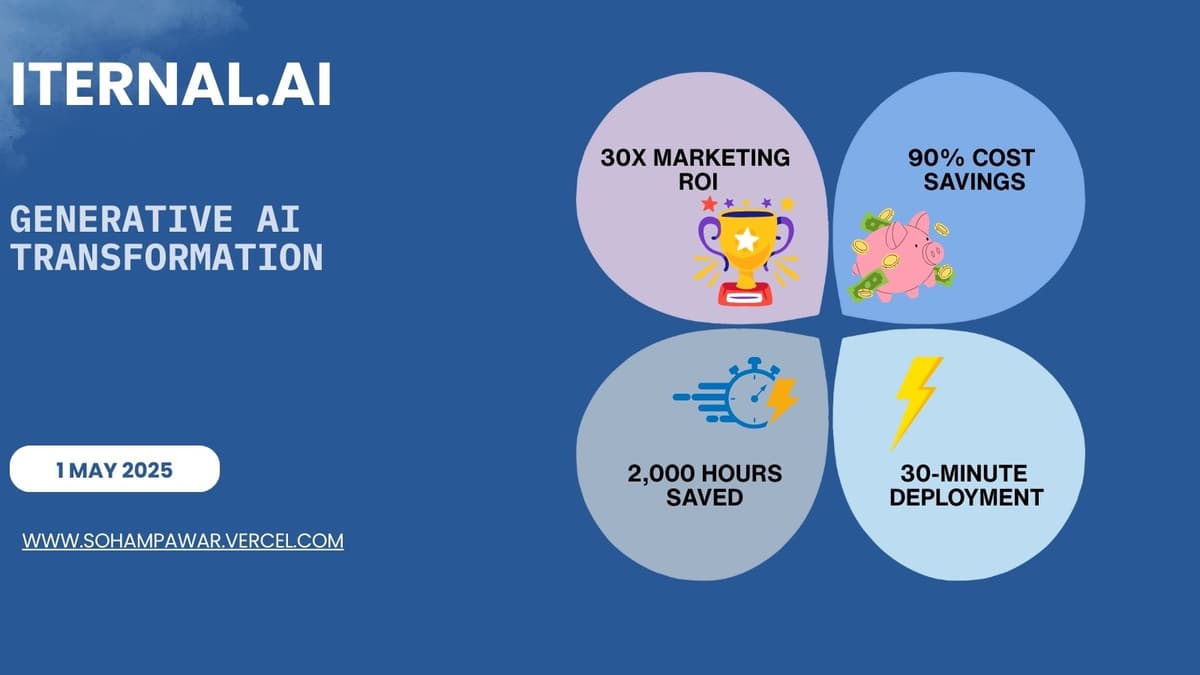
Perhaps the most striking example of generative AI's ROI potential comes from Iternal Technologies, which leveraged AWS infrastructure and NVIDIA GPU-based instances to implement generative AI for marketing:
- 30x Marketing ROI for customers
- 90% Cost Savings for clients
- 2,000 Hours Saved in developer time
- 30-Minute Deployment time for generative AI solutions
By focusing on hyperpersonalization at scale, Iternal demonstrates how generative AI can transform marketing operations with exponential returns when properly implemented.
Sector-Specific ROI Analysis
Banking and Financial Services
- Potential Value: 2.8-4.7% of the industry's annual revenues (approximately $200-$340 billion)
- Beyond Financials: Enhanced customer satisfaction, improved decision-making, and decreased risk through better fraud monitoring
Marketing and Sales
- Impact Scale: One of four business functions capturing 75% of generative AI's potential value
- Estimated Impact: $400-$660 billion annually in retail and consumer packaged goods sectors
- Key Benefits: Enhanced content personalization, multilingual adaptation, and data-driven marketing strategy development
Customer Operations
- Trust Factor: 70% of customer support leaders report increased trust in generative AI since 2023
- Retail Applications: Retailers adopting generative AI for customer service report improved efficiency while making digital interactions more human
- Call Centers: Organizations using generative AI report better personalization and customer satisfaction
The Transformation of Content Creation Processes
Accelerated Ideation and Production
Generative AI significantly reduces the time required for ideation and content drafting, saving valuable time and resources for faster time-to-market. From generating social media posts and blog articles to crafting email campaigns, AI models produce draft content that human marketers can refine and personalize.
Enhanced Personalization at Scale
Teams can dramatically increase personalization of marketing messages for different customer segments, geographies, and demographics. Mass email campaigns can be instantly translated into multiple languages with varying imagery and messaging depending on the audience.
Improved Data Utilization
Generative AI helps marketing functions overcome challenges of unstructured, inconsistent, and disconnected data by interpreting abstract data sources such as text, images, and varying structures. It synthesizes trends, key drivers, and market opportunities from unstructured data like social media, news, and customer feedback.
SEO Optimization
Marketers achieve higher conversion and lower costs through AI-powered search engine optimization for marketing and sales components such as page titles, image tags, and URLs.
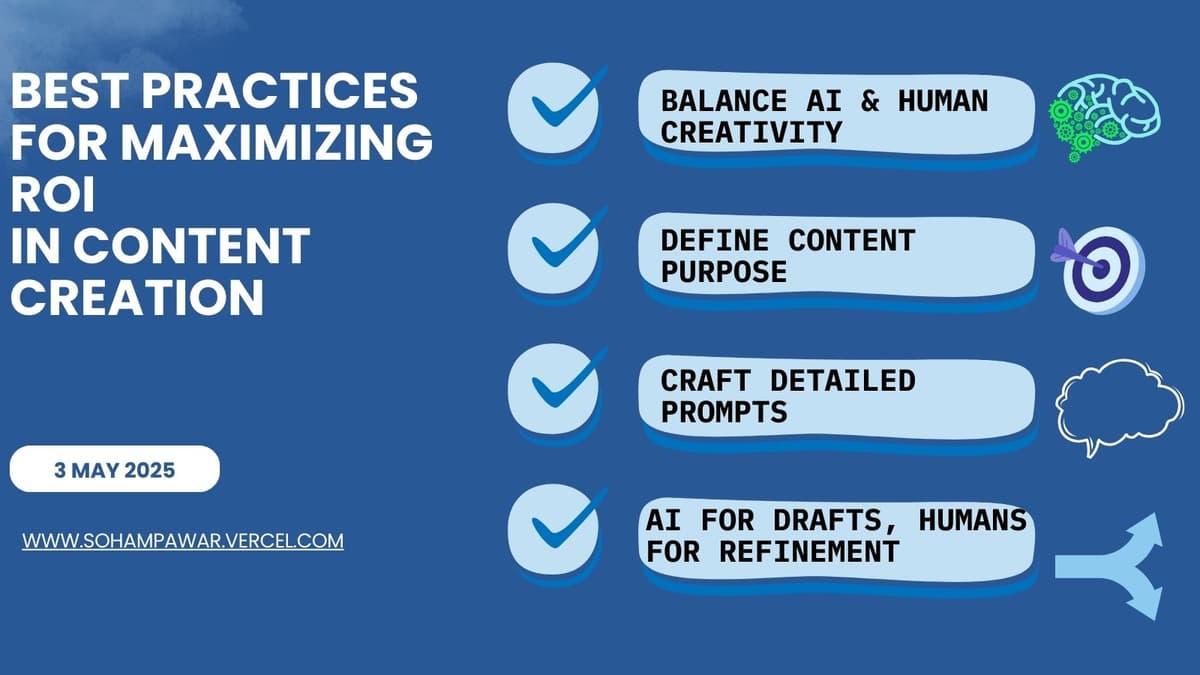
Implementation Best Practices for Maximizing ROI
Balance Automation and Human Input
Strike a balance between automated generative AI and creative human thought. Use AI-generated content as a starting point and add your expertise to ensure it adheres to your brand's core principles and appeals to your target market.
Define Clear Content Purpose
Before generating content, clearly define the purpose, target audience, and desired tone. This helps guide the AI tool and ensures that the content aligns with your brand's goals.
Craft Detailed Prompts
Provide explicit instructions and constraints to the AI model. A well-structured prompt should include the topic, key points, desired length, and any specific requirements.
Focus on Initial Drafts
Utilize AI to generate first drafts of content, saving time and overcoming writer's block. This approach allows you to focus on refining and personalizing the content later.
Ensure Ethical Compliance
Use licensed or original content to respect legal restrictions and avoid copyright infringement. Maintain transparency with your audience about AI usage in content development.
5 Actionable Takeaways
-
Start with High-Volume Content Needs: Begin your generative AI implementation where you have the greatest content volume requirements to maximize initial ROI.
-
Invest in Prompt Engineering Skills: Developing expertise in crafting effective prompts will significantly improve your generative AI outputs and increase ROI.
-
Implement Measurement Frameworks: Establish clear metrics to track both efficiency gains (time saved, volume increase) and effectiveness improvements (engagement, conversion).
-
Create Human-AI Collaboration Workflows: Design processes that leverage AI for initial drafts and research while reserving human creativity for refinement and strategic decisions.
-
Continuously Test and Learn: Regularly experiment with different approaches to generative AI implementation and share learnings across teams to maximize organization-wide ROI.
The Future Outlook
As generative AI capabilities continue to advance, we can expect even greater ROI potential in content creation. McKinsey research estimates that generative AI could add between $2.6 trillion to $4.4 trillion annually across analyzed use cases.
This transformative impact will likely accelerate as more organizations move beyond experimental implementation to strategic integration of generative AI across their content operations.
The ongoing development of industry-specific LLMs and more sophisticated prompt engineering will further enhance the technology's ability to generate highly relevant, targeted content that delivers measurable business value.