Beyond the Glass Doors: Deconstructing Apple's Retail Strategy in India
Apple's shift from a Partner to a Build strategy in India is a masterclass in patience, timing, and long-term market dominance. This blog deconstructs the strategic pivot behind Apple's own retail stores in India.
Beyond the Glass Doors: Deconstructing Apple's Retail Strategy in India
For over a decade, a fundamental question echoed through India's business and tech circles: "When will Apple open its own stores?" The question itself, however, missed the strategic nuance. Apple was already in India, operating through a vast network of partners. The real conflict was never about if Apple would enter, but how. Why did one of the world's most controlling brands wait so long to build its iconic retail "temples"? And why, after years of a partner-led approach, are they finally planting their flag?
The answer is far more profound than a simple quest for higher sales. Apple's shift from a "Partner" to a "Build" strategy in India is a masterclass in patience, timing, and long-term market dominance. It's a deliberate investment in controlling the narrative, owning the premium customer experience, and cementing its reign in the most dynamic consumer market of the next generation.
The 'Partner' Era: A Strategy of Necessity and Compromise
For years, Apple's market entry strategy in India was a classic "Partner" model. They relied on a network of Apple Premium Resellers (APRs) like Aptronix and iPlanet, and distribution giants like Redington and Ingram Micro. This wasn't a choice born of desire, but of necessity.
Early on, India's strict Foreign Direct Investment (FDI) policies for single-brand retail created significant barriers. The most notable was the 30% local sourcing rule, which mandated that foreign companies source a significant portion of their goods from within India — a challenging feat for Apple's globally integrated supply chain.
This partner-led model had clear advantages:
- Rapid Scale: It allowed Apple to establish a nationwide presence quickly without the massive capital expenditure of building its own stores.
- Lower Risk: Partners bore the financial and operational risks of real estate, hiring, and inventory.
- Local Expertise: Resellers understood the local market nuances and consumer behavior.
However, this came at a strategic cost: the customer experience. While APRs did a commendable job, they were not Apple. The store ambiance, the level of staff training, product availability, and the overall "magic" associated with an Apple Store were diluted. For a brand whose equity is built on meticulous control, this was a significant compromise.
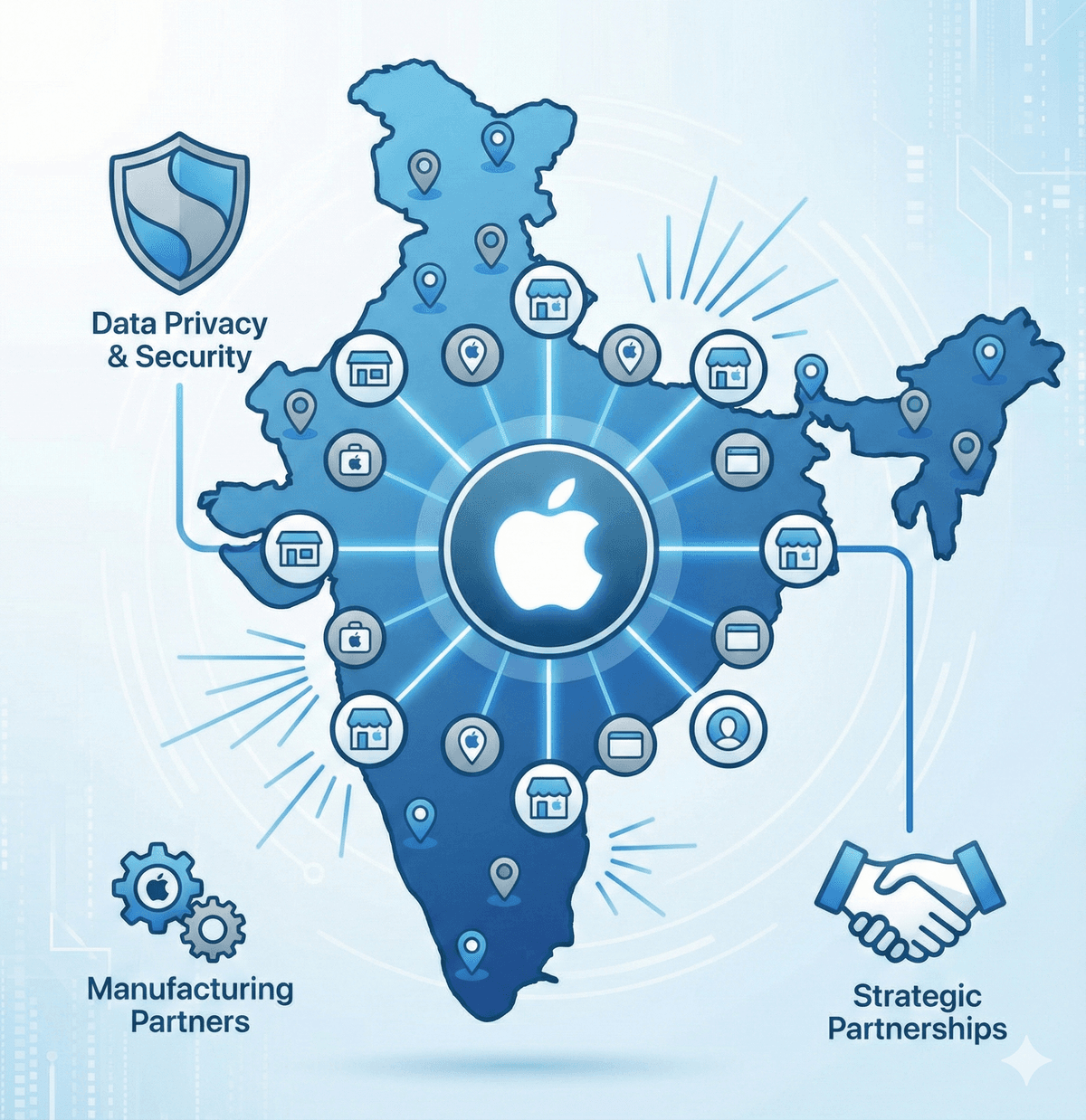
The Shift to 'Build': Analyzing Apple's Market Entry Strategy
So, what changed? The shift to building company-owned, company-operated stores wasn't triggered by a single event, but a confluence of three powerful forces.
-
Regulatory Evolution: The Indian government progressively relaxed its FDI norms. Critically, it clarified the 30% local sourcing rule, allowing companies to count exports from India towards the requirement and providing a grace period. This policy shift was the key that unlocked the door for Apple to invest directly.
-
Market Maturity: The Indian consumer market has evolved dramatically. The premium smartphone segment is exploding, growing at over 20% year-over-year. Indian consumers are now more willing and able to pay for premium products and experiences. Apple's revenue in India rocketing past $6 billion is a testament to this shift.
-
Strategic Imperative: To capture the next wave of growth and fend off competitors, Apple recognized it could no longer afford a diluted brand experience. The "Partner" model had reached its ceiling. To truly build brand loyalty and dominate the premium category, Apple needed to control the entire customer journey.
A Statement of Intent: The Apple BKC Mumbai Launch
Nothing declared this new era more powerfully than the launch of Apple BKC in Mumbai. This was not a store opening; it was a cultural event. For days, massive queues snaked around the Jio World Drive mall. The atmosphere was electric, culminating in CEO Tim Cook personally opening the doors to a cheering crowd. One enthusiast famously brought his 1984 Macintosh SE to the opening, a symbol of the deep, multi-generational loyalty the brand inspires.
The store itself is a strategic masterpiece. Its design, with a handcrafted timber ceiling and stone walls sourced from Rajasthan, reflects local artistry. It operates on 100% renewable energy, aligning with global brand values. This wasn't just a retail space; it was a "statement of intent," signaling that Apple is in India for the long haul, and on its own terms.
3 Reasons Controlling the Experience is Apple's Endgame
Why is owning the physical retail space so critical? It's about more than just transactions.
-
Total Brand Control: From the lighting and music to the expertise of the Geniuses, Apple now dictates every micro-interaction a customer has with the brand, reinforcing its premium positioning.
-
Building an Ecosystem, Not Just Selling Products: The stores are community hubs. Through "Today at Apple" sessions and hands-on support, they draw users deeper into the ecosystem of services, software, and accessories — a crucial driver of long-term revenue.
-
Establishing a Moat: By creating an unparalleled retail experience, Apple builds a powerful competitive moat. Competitors can try to match product specs, but replicating the aura, community, and brand equity of an Apple Store is nearly impossible.
Conclusion: A New Blueprint for Luxury in India?
The long-term Apple retail strategy in India is a calculated, strategic pivot from a low-risk "Partner" model to a high-control "Build" model. It's a playbook that acknowledges that in a market as vast and aspirational as India, true dominance in the premium segment isn't won through third-party resellers, but through direct, unmediated relationships with customers.
This move raises a provocative question for the future: As the Indian consumer's appetite for luxury grows, will other global premium brands be forced to follow Apple's lead and invest in their own cathedrals of commerce?