Breaking Down Amazon’s Play in Cloud Gaming: The Five Forces Behind Its Big Bet
A deep dive into Amazon Luna and its strategic positioning in the cloud gaming market analyzed through the lens of Porter's Five Forces.
Breaking Down Amazon’s Play in Cloud Gaming: The Five Forces Behind Its Big Bet
In 2019, cloud gaming became a reality that was to happen. The large technology firms would merely be streaming games to any gadget with an internet connection, no costly consoles, no long downloading, no need to wait to access AAA games, just pay and play. However, five years on, the industry is still a laboratory of unfinished experiments. Stadia, a product of Google, was closed down in January 2023 having destroyed years of investment and customer trust. Xbox Cloud Gaming by Microsoft is still hooked to Game Pass, which takes convenience at the expense of performance. GeForce NOW by NVIDIA leads in the areas of latency and graphics quality, but you need to have the games elsewhere. Meanwhile, Luna, the Amazon service, is running in the background, with little celebration, but is perhaps in a better strategic position than any other competitor.
This isn’t accidental. The vision of Amazon to become a cloud gaming company is not an extracurricular activity or technology demonstration. It is a strategic step to manage one of the crucial cross roads: the place where content distribution, infrastructure and consumer behavior intersect. In order to make sense of why Luna is important, and why it could be successful where Stadia failed, we have to deconstruct the five competitive forces transforming cloud gaming, and why Amazon might think differently.
The Longer-than-You-Thought Market.
The market size of cloud gaming is estimated to be 2.27 billion dollars in 2024 and is expected to increase to 21.04 billion dollars by 2030 at a rate of 44.3% per annum. That would be a booming growth, yet that is an indicator of a young market. Contextually, the gaming industry in the world is over 180 billion a year. Even at its estimated climax, cloud gaming will own only 12 percent of the entire market by 2030, not the market share of the future once promised, but a large and expanding portion.
Asia Pacific already contributes 45 percent of the existing revenue in cloud gaming with the extensive use of 5G and the extensive use of smartphones as the main gaming devices. North America, which is supported by the superior broadband infrastructure and penetration of Game Pass, covers 22 percent of the market. These regional differences are important: the development of cloud gaming will be conditioned by the fact that the internet quality, the prevalence of devices, and the readiness of consumers to pay will meet.
The reasons why Amazon Luna Is Not Another Stadia.
The failure of Google Stadia provides a bleak blueprint on how not to do it. On several fronts the service was also a flop: the high latency ruined competitive gameplay, Linux operating system complicated porting of games and the business model of Stadia forced them to buy individual games, which contradicts its value proposition when competitors were providing subscription libraries. Above all, Stadia never had a distribution edge; Google did not have a platform to sell it, no existing user base to jumpstart its use.
Amazon is positioned in a completely different place. Prime Video and Prime Music already educated 200+ million Prime members about the future of digital entertainment that would not cost them any incremental cost. Alexa provided Amazon with a home presence in millions. Twitch is the largest live streaming gaming system in the world with close to 9 million broadcasters. AWS dominates 30% of cloud infrastructure worldwide- a layer of business benefit that consumers cannot see but which is essential to business.
Luna is not placed as a replacement of a gaming console. It is already being integrated within Prime as a packaged experience, which can be played on Fire TV, smart television sets, tablets, and browsers- devices that are already in possession of Prime members. The tension is almost negligible. No hardware is needed to be bought. No new subscription negotiation. All you need to do is to fire up Luna on your TV this evening, and within a few seconds you are playing.
The Five Forces that Amazon Cloud Gaming Strategy is Shaped by.
Although the Five Forces framework was developed in the context of conventional industries, it is easy to see why cloud gaming is so competitive and why Amazon has structural strengths.
1. Competition: The Competitive Intensity Issue.
Cloud gaming is split between three hardcore competitors with regard to attention and content budgets: NVIDIA GeForce NOW, Microsoft Xbox Cloud Gaming, and Sony PlayStation Remote Play.
The performance standard is established by GeForce NOW. It supports PC games with NVIDIA RTX 4080 servers at a maximum resolution of 4K and a frame rate of 120 frames per second with latency of between 30–40 milliseconds-enough to play competitively. The trade-off: you have to have games on other platforms (as a rule, on Steam), and the subscription fee is higher than the competitors, reaching 19.99 per month in the highest tier.
Xbox Cloud Gaming takes advantage of the large scale of Microsoft, Game Pass having 1,000+ titles of content, and direct compatibility with Xbox consoles. It has 20+ million users and enjoys Microsoft enterprise relationships. Its shortcoming: the visual quality hits its peak at 1080p, and more vicious compression is made to guarantee stability in diverse network settings. The input latency is around the 40–50 milliseconds, which is playable, but easily noticeably slower than GeForce NOW.
PlayStation Remote Play is an ecosystem that allows the PlayStation 5 owners to stream their PlayStation on a remote. It is safe and fast, but confined to those who are already involved in the PlayStation world.
Competition is intense, but disjointed. These competitors do not dominate the largest number of cloud gaming users. The existence of that fragmentation is an opportunity to Amazon.
2. Buyer Power: Performance-Convenience Tradeoff.
Gamers are not a homogenous group. The most important to casual players (the greatest number of users) is access and price. They desire to play social games, indie games, and less serious AAA games without having to purchase a console. Gamers who are hardcore require less than 50 milliseconds latency, rich graphics, and extensive game collections; they do not mind spending high prices on performance.
This segmentation matters. The target of the strategy of Amazon is on the first-mover, casual and lifestyle gamers, the least friction and the highest volume segment. Such users can withstand 50+ millisecond latency provided the game is free and does not need hardware investment. That is where Prime members congregate.
Buyer power cuts two ways, however. Gamers anticipate the seamless performance, selection and value. Should Luna fall behind, break down, or push players onto a worse game library, then this leverage works against Amazon. The Stadia debacle conditioned the consumer to be suspicious. Cloud gaming will have to demonstrate that it will not evaporate.
3. Supplier Dependence: Content, Infrastructure and Bottleneck of ISP.
Content is regulated by the game publishers. Amazon is only allowed to stream games with the consent of publishers and exclusive deals are more favorable to larger companies such as Microsoft (which owns studios) or established console manufactures. This is the reason that Luna does not have the must-play titles that lead to early adoption.
Margins are narrowed by server equipment and graphics cards. NVIDIA is practically the owner of discrete GPUs; Microsoft has contacts with its own chipsets; Amazon is dependent on the size of AWS, yet it is not deprived of the global limitations on semiconductor production.
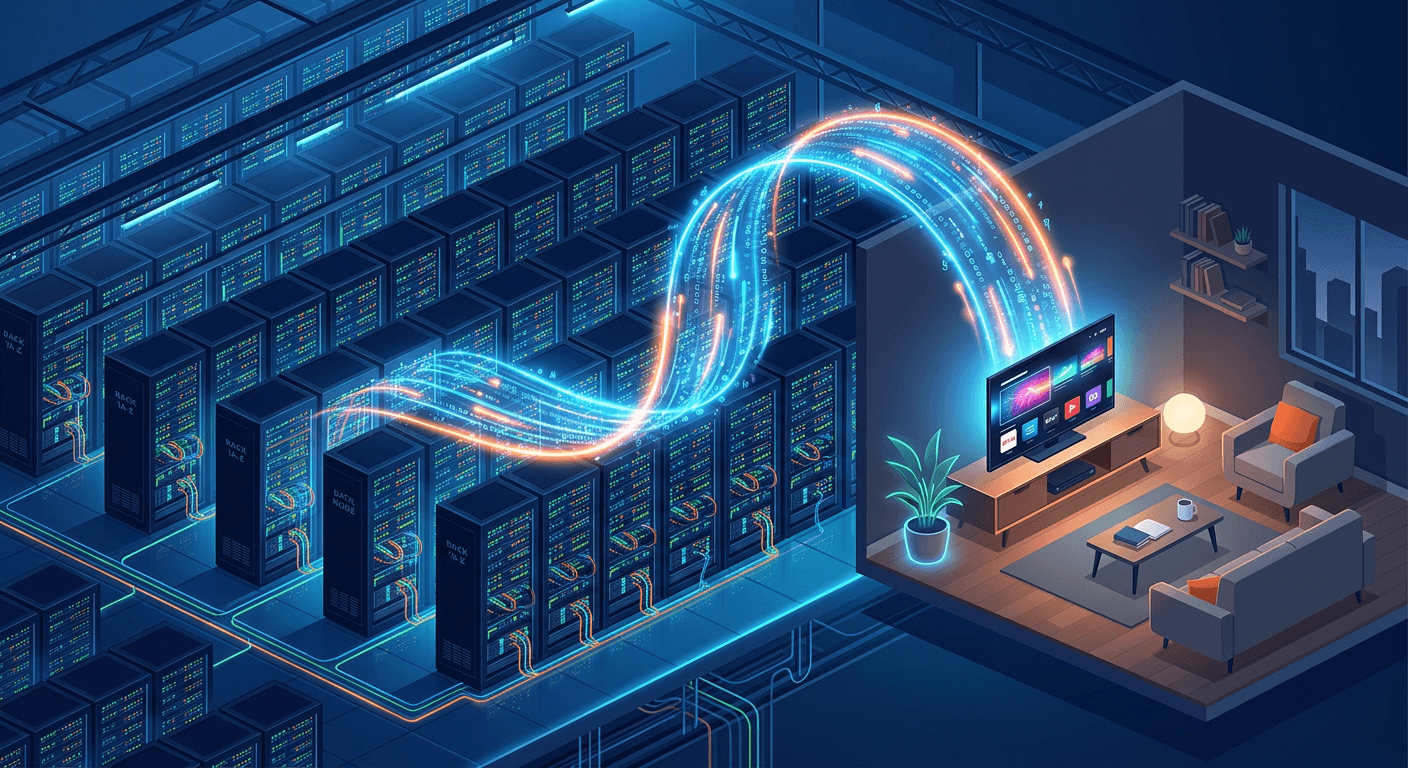
The most important of all, the silent gatekeepers are ISPs and broadband providers. Cloud gaming necessitates low bandwidth (25 Mbps of 1080p/60fps, 35 Mbps of 4K), low latency and low packet loss. In rural and under-served areas, there are no such conditions. Amazon does not have any control over this supplier- a basic weakness that is prevailing throughout the industry.
4. Threat of Substitutes: Why Consoles and Game Pass Still Win.
Local hardware PlayStation 5, Xbox Series X, high-end gaming PCs are still better graphics, less latency, and do not have a network dependency. Cloud gaming is an option, not a substitute to the current players as long as console manufacturers package exclusive games and have the ability to be price competitive.
Game Pass is a replacement in itself. Microsoft subscriptions cost 1,000+ games on console, PC, and cloud at a monthly price of 16.99. It is a more advanced ecosystem than what Luna is providing, so players tend to prefer Game Pass to Luna because of coverage and consistency.
The worst replacement is mobile gaming, free-to-play games on iOS and Android. Smartphones with no streaming layer are playing games to billions of people. To the casual player, Candy Crush wins Luna since it has zero set up and social mechanics that are proven to be effective.
Amazon response: by making Luna a part of Prime, Amazon will make it free or almost-free to existing Prime members, making the cost of trying cloud gaming seem less expensive.
5. Entry Barriers: Where Amazon Has Advantage.
The creation of a cloud gaming platform will need:
- Low-latency data centers in dozens of locations around the globe. Expense: billions of dollars in years.
- Licensing of content to publishers, studios and IP owners. The retail relationships provide some leverage to Amazon.
- Trust in consumers after decades of unsuccessful cloud gaming experiments. This is intangible but real.
- Ecosystem Compatibility — smart TVs, smart phones, smart tablets, smart browsers, smart consoles.
This is the point where Amazon differs with potential competitors. The 30 percent global cloud infrastructure share of AWS implies that the company already has the most extensive network of servers on the earth. GeForce NOW and stadia created their networks. Azure is used by Microsoft, but it had to acquire or develop gaming skills. Amazon is capitalizing on infrastructure which it services billions of dollars of existing business enterprise.
As well, the Prime membership is an existing distribution channel. Amazon is not asking humanity to switch to Luna it is asking humanity to utilize something that is already included in a service that they are already paying for. This will remove the cold-start issue that plagued Stadia, which involved gamers making a positive choice to switch to a brand-new ecosystem.
The Three Strategy Levers Amazon Is Going.
Lever 1: AWS Infrastructure: The Silent Superpower.
The 30 percent cloud market share of AWS is a benefit in terms of real business. The corporation has six-continent data centers that have advanced edge-computing infrastructure. When a game is streamed through Luna, the servers serving the stream are operated on the same infrastructure as Netflix, Slack, and Airbnb.
This brings about cost-efficiency advantage. Amazon does not require negotiating with third-party cloud providers and developing parallel infrastructure. The capex has already been sunk in AWS. That cost benefit, however little per user, scales. Where subscription margins are low, infrastructure efficiency is the difference between success and failure in the market.
Further, the worldwide presence of AWS provides Luna with the opportunity to roll out in new geographies progressively without constructing new data centres due to the availability of existing ones.
Lever 2: Prime + Luna as an Ecosystem Bundle.
Amazon does not position Luna as a single gaming service. It positions it as a continuation of Prime — the same way that Prime members can watch Prime Video, listen to Prime Music, and read Prime Reading without paying extra.
This is the anti-Stadia move. Stadia needed a different sign-up, different billing relationship and different value proposition. Luna is integrated into the platform of a service that already has Prime members and they pay. The switching cost on mental side is close to zero.
This type of bundling builds a second benefit: addictive behavior. Prime members already identify with their Prime account as being a means of entertainment. It is natural, but not experimental to add games to that mental model. On the side of Amazon, it lowers churn — people do not leave Prime because they tried Luna and did not like it; they simply do not use the gaming option.
The content ownership trap that killed Stadia is also avoided in the bundled model. Games are not purchased on Luna; one logs into a library as a Prime member. In case Luna changes content, it is annoying, but it is not economically disastrous to the customer.
Lever 3: Twitch Integration and the Creator Ecosystem.
Game culture is found on twitch. Gaming streams are viewed by millions of people every day, and content creators are the taste-makers in the business. Traditionally, to watch a game on Twitch and play it, one had to take different actions: to write down a name of a game, buy the game on another platform (consoles, Steam, Epic Games), and play it.
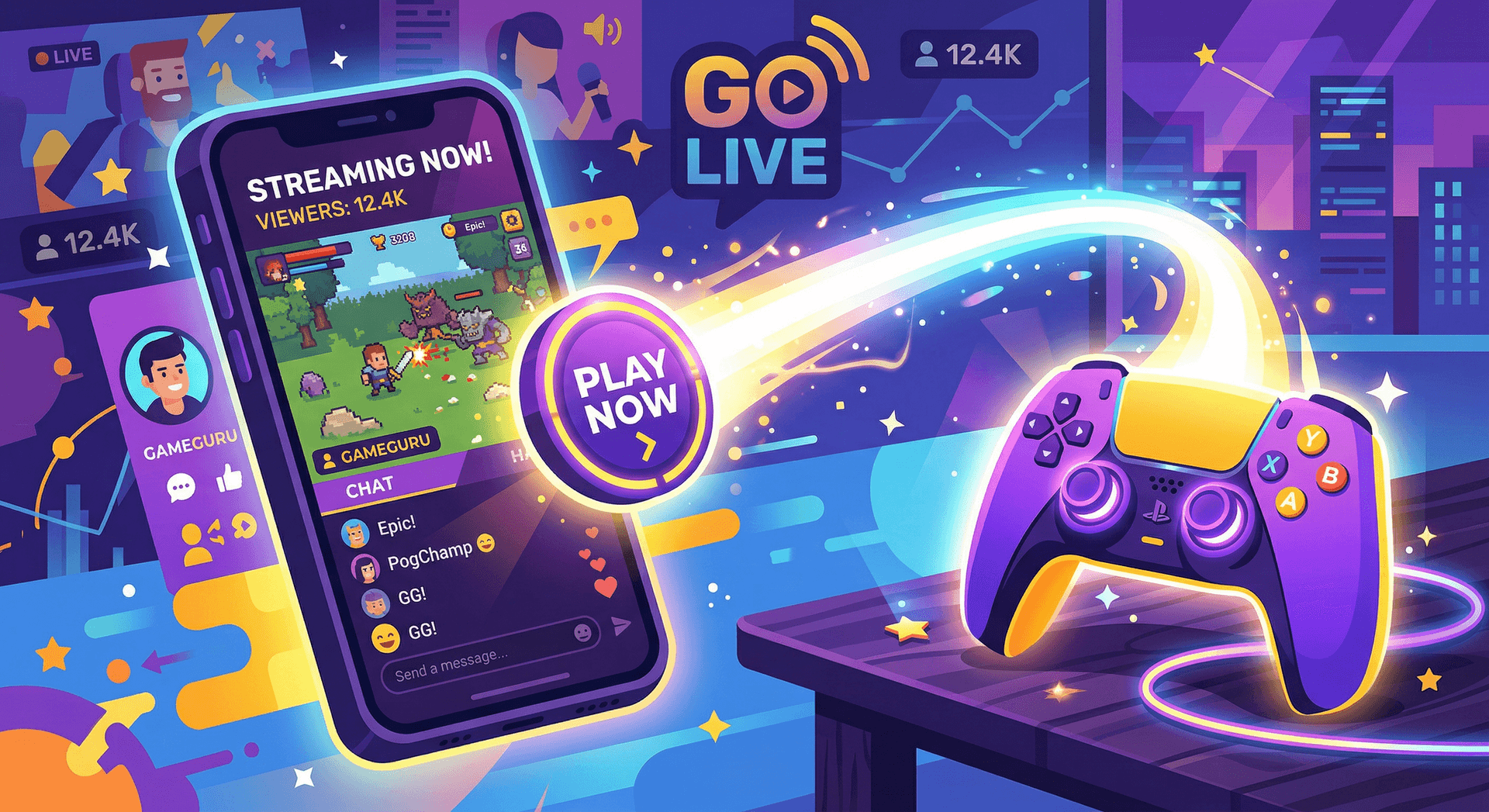
The friction is short-circuited with Twitch integration by Luna. A visitor to a stream on Twitch can press the Play Now button, log in with their Amazon account, and start playing the game instantly on Luna as long as the game is in the Luna library and the device used supports it. This is a unique advantage. GeForce NOW is also similar and you need to have the game in another platform. Xbox Cloud Gaming has library access and does not have the same level of depth in creators that Twitch has.
This is potent to game publishers. One Twitch stream turns out to be a funnel to Luna players. The producers are able to prompt the audience to download Luna and play, which in essence becomes a distribution mechanism.
Why This Matters: The Ecosystem Lock-In Thesis.
The strategy of Amazon is based on a thesis: the cloud gaming will eventually be won by the distribution infrastructure owner, rather than the technology. Technology is table stakes. It requires a latency of less than 50 milliseconds, flexibility of its device and a decent game library. But they’re not sufficient.
Enough is ecosystem integration, the capability to front load cloud gaming to the users who are already in consumption of your other services. Prime members who view Luna recommendations in their Prime app, Fire TV users who view Luna as the default gaming experience, Twitch viewers who can play with a single click- such experiences trigger the experience of adoption gravity that no longer can be matched by pure product quality.
This was what Microsoft realized with Game Pass and Xbox integration. Sony knows this in the ecosystem of PlayStation. Google, through Stadia, possessed Google Play and YouTube, yet did not incorporate cloud gaming into either one of them with convincing force.
Amazon possesses all three components distribution (Prime), platform (AWS), and cultural leverage (Twitch). It is not about whether Luna has superior technology compared to GeForce NOW- it does not, yet. The question is, can Amazon become Luna the default gaming layer among the Prime members, as it had become Prime Video the default film and television streaming service.
The Obstacles to Come: Why Luna is not a Slam Dunk.
Amazon has its actual challenges despite all its structural benefits.
- Performance still matters. Latency is accepted by casual gamers but not competitive gamers. The performance of Luna can be described as decent yet not leading in the industry. Some of the players will defect in case they notice the distinction between the sharp, low-latency gaming experience offered by GeForce NOW and the experience offered by Luna.
- Exclusivity of the content is evasive. Xbox Game Pass has unprecedented access to blockbuster titles on day one due to the ownership of Bethesda, Activision Blizzard and other studios by Microsoft. Luna lacks this advantage. Amazon has attempted to invest in game studios (Lumberyard, Amazon Game Studios), which so far have not yet resulted in blockbuster titles that can drive adoption.
- Amazon is still not in control of network infrastructure. In case the ISP of a player does not offer enough bandwidth or experiences packet loss, Luna will perform badly- and the user will accuse Amazon. The broadband is being improved (5G, fiber deployment), but it is either a generational change, not a quarterly change.
- The skepticism of consumers does not disappear. The failure of Stadia, in which players were denied access to games they bought, resulted in a lack of trust. “What if Luna shuts down?” is a valid question that plagues all adoption of cloud gaming.
- Fragmented game support. The library of Luna is smaller compared to Game Pass. Although quality is more important than quantity, breadth still has a role in the decisions to purchase. The amateur gambler who is inquiring, Can I play X on Luna? in many cases finds the answer to be no.
Conclusion: The Silent Bet That Has Potential to Pay off.
The play of Amazon in cloud gaming is not bold in terms of its technology which is not revolutionary but in terms of strategy. Instead of making a bet that a single product or exclusive content will win, Amazon is betting that it is infrastructure, distribution, and ecosystem integration that will ultimately decide who will own the future of cloud gaming.
The company is planting Luna in Prime where it is co-locating with services used by hundreds of millions of people day in, day out. It is making Luna thread to Twitch, where the future of the game culture is taking place. It is taking advantage of the global architecture of AWS to achieve cost and scale unattainable by its competitors.
This does not imply that Luna will take over. The technical performance edge of NVIDIA, the content edge of Microsoft with Game Pass, and the lock-in of the ecosystem of Sony are still powerful. It does not imply that Amazon is no longer playing the same game, however, the winner is the one who builds the most convenient route between interest and play.
There will come a time when cloud gaming market will consolidate. Should Luna end up defaulting of the casual gamer, the same way Prime Video ended up defaulting as the streaming service of most people, then the big bet of Amazon will have paid off. When Luna is a secondary offering, then the full power of Amazon infrastructure and distribution will not be enough to counteract the gravitational force of other competitors with more powerful exclusive content or better performance.
The result will be self-explanatory over a period of two to three years, where 5G and fiber implementation will expand the market reach of viable cloud gaming. Up to that point, the silent nature of Luna becoming a part of Prime is the most interesting strategic decision in cloud gaming not because it is flashy but because it avoids the hype and concentrates on what actually drives adoption, which is making it easier to say yes to those using it.